
How It Works
A heat pump is an electrical device that extracts heat from one place and transfers it to another. The heat pump is not a new technology; it has been used around the world for decades. Refrigerators and air conditioners are both common examples of this technology.
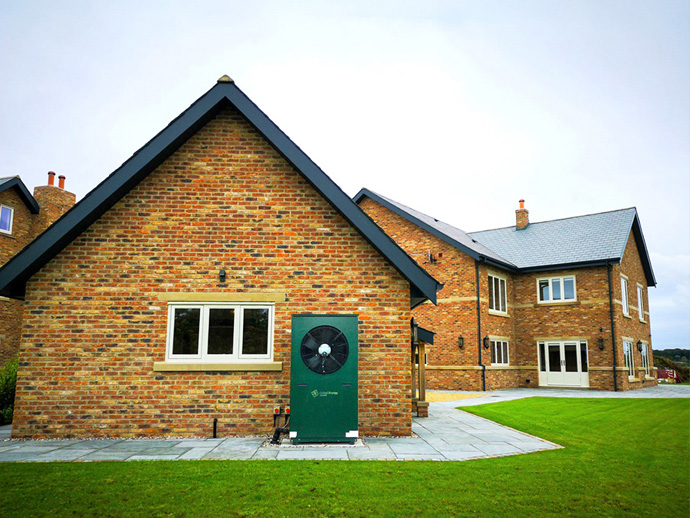


Air Source Heat Pumps
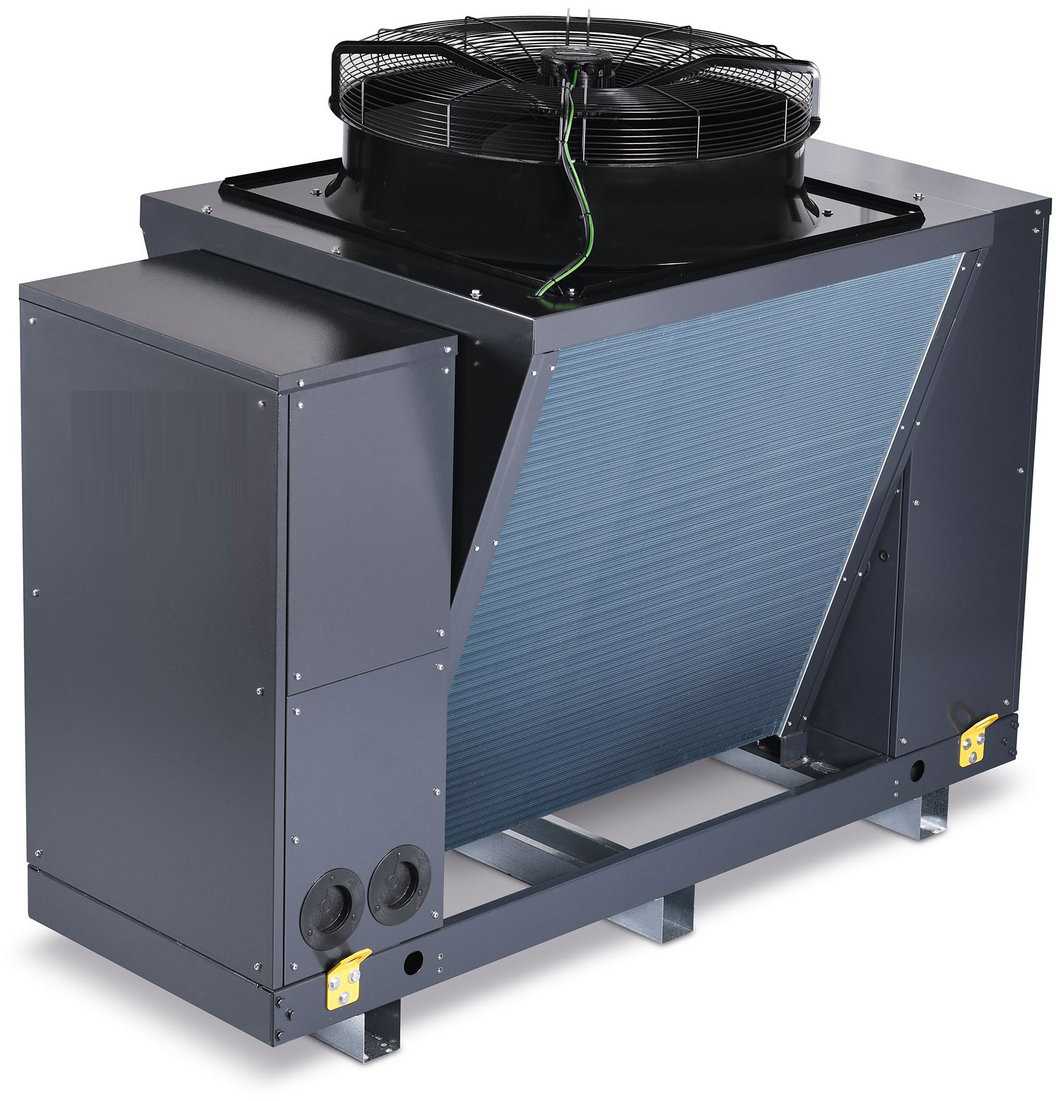
How Does an Air Source Heat Pump Work?
- Heat pumps transfer heat by circulating a substance called a refrigerant through a cycle of evaporation and condensation.
- A compressor pumps the refrigerant between two heat exchanger coils. In one coil, the refrigerant is evaporated at low pressure and absorbs heat from its surroundings.
- The refrigerant is then compressed en route to the other coil, where it condenses at high pressure. At this point, it releases the heat it absorbed earlier in the cycle.
- Refrigerators and air conditioners are both examples of heat pumps operating in the reverse (cooling) mode. A refrigerator is essentially an insulated box with a heat pump system connected to it.
- The evaporator coil is located inside the box, usually in the freezer compartment. Heat is absorbed from this location and transferred outside, usually behind or underneath the unit where the condenser coil is located.
- Similarly, an air conditioner transfers heat from inside a house to the outdoors.
- Heat pumps can provide year-round climate control for your home. Since the air outside always contains some heat, a heat pump can supply heat to a house even on cold winter days.
- In fact, air at –18°C contains about 85 percent of the heat it contained at 21°C.
Heat Pump Components
- The refrigerant is the liquid/gaseous substance that circulates through the heat pump, alternately absorbing, transporting and releasing heat.
- The reversing valve controls the direction of flow of the refrigerant in the heat pump and changes the heat pump from heating to cooling mode or vice versa.
- A coil is a loop, or loops, of tubing where heat transfer takes place. The tubing may have fins to increase the surface area available for heat exchange.
- The evaporator is a coil in which the refrigerant absorbs heat from its surroundings and boils to become a low-temperature vapour. As the refrigerant passes from the reversing valve to the compressor, the accumulator collects any excess liquid that didn’t vaporize into a gas. Not all heat pumps, however, have an accumulator.
- The compressor squeezes the molecules of the refrigerant gas together, increasing the temperature of the refrigerant.
- The condenser is a coil/heat exchanger in which the refrigerant gives off heat to its surroundings and becomes a liquid.
- The expansion device lowers the pressure created by the compressor. This causes the temperature to drop, and the refrigerant becomes a low-temperature vapour/liquid mixture.
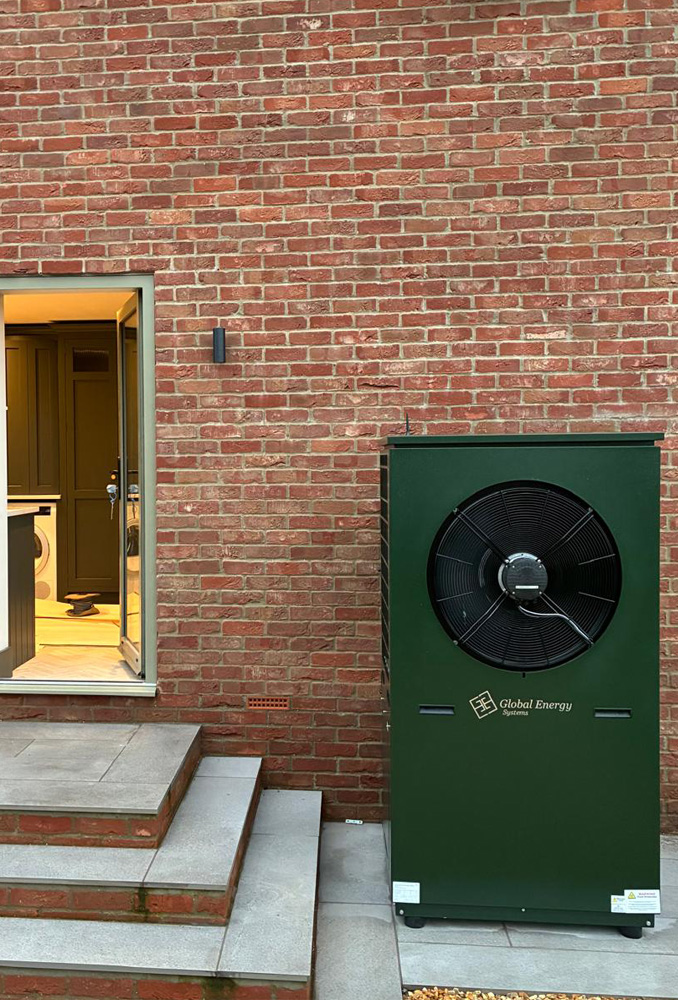
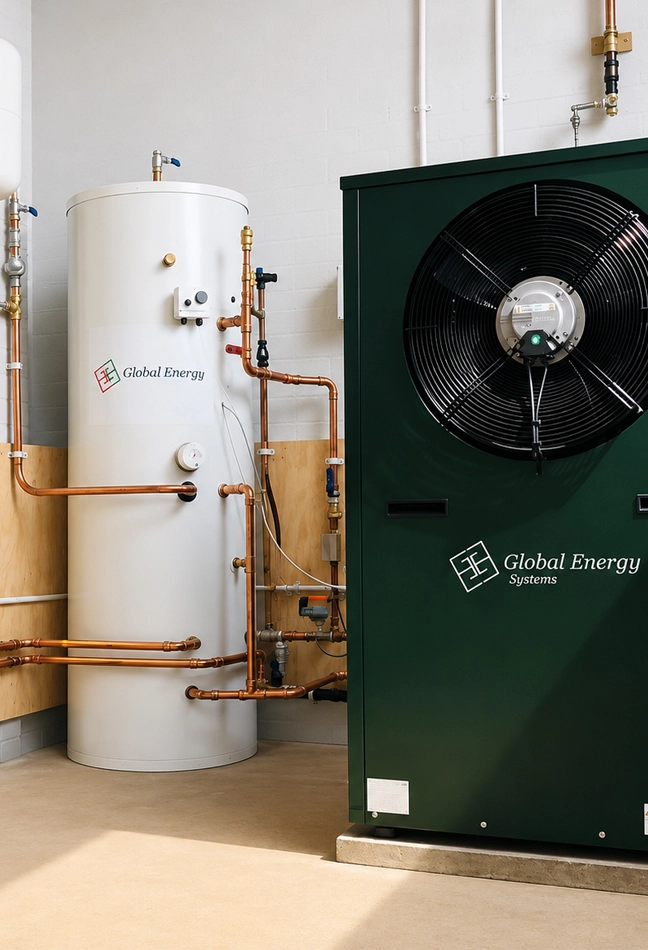
All ASHP heating systems are highly efficient and are now being proposed as an addition in the UKs green energy transition within the UK government. Widespread heat pump adoption would achieve more affordable energy that is both low carbon and more renewable.
The UK government aims to install 19 million heat pumps in new build properties, in order to achieve Net Zero by 2050.
To make this renewable energy source even cheaper to run and to reduce air source heat pump costs. the UK government is offering heat pump grants.
In a recent special report, the International Energy Agency stresses that if Net Zero is to be achieved by 2050 then no new gas boilers should be sold after 2025.
Heat pumps are clearly the way forward as they provide a far better, low-carbon alternative to heating homes in the foreseeable future.
When considering ASHP for your home, it is wise to consult with a professional air source heat pump installer who can advise on all the pros and cons of installing this in your home. Here at Global Energy Systems, we have the expertise to help with this.
Click the link below, fill in the form, and we can send you a free initial feasibility report including estimated carbon savings, capital cost and running costs.
It’s free, with no obligation.
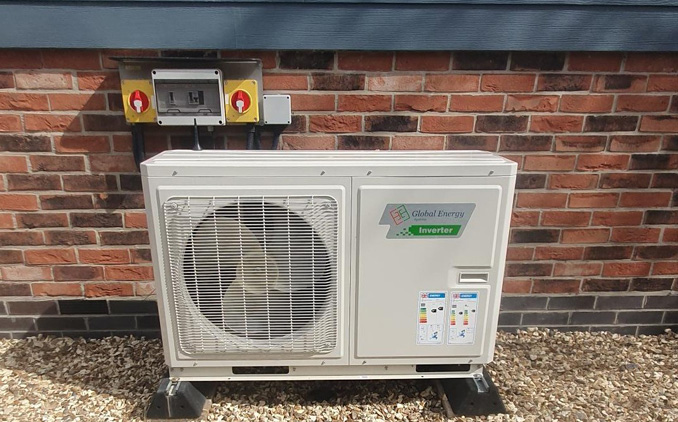
Low Carbon footprint
As outside air is used to heat the home, air source heat pumps are a good form of low carbon heating. If switching from a coal or electricity-based heating system, the carbon emissions will be greatly reduced. With an air source heat pump, typically only 1 unit of electricity is used for every 3-4 units of energy produced.
UK Boiler Upgrade Scheme
The UK Boiler Upgrade Scheme is offering £9000 towards the upfront costs of an air source heat pump. All successful applicants would receive a redeemable voucher which would need to be used with three months of receipt, whereby the pump would be installed during this period.
In April 2022, the government launched a £3.9 billion initiative as part of the Heat and Buildings Strategy. This scheme will run until April 2025.
The scheme has been set up to encourage a higher uptake of low carbon heating technologies across homes in England and Wales. Funds are granted towards the costs of installing ground source heat pumps, air source heat pumps, and biomass boilers, all of which are far more environmentally friendly than natural gas boilers.
For further information on the grants available, check out this article on heat pump grants in the UK.
Heating Systems
A great benefit of air source heat pumps is that it can be used for both heating indoor spaces and for heating water. .
ASHP is also a great source for under floor heating or radiators, which is strongly recommended when installing a new air source heat pump system.
Space Heating and Hot Water
Some air source heat pumps are also able to heat your water. This is dependent on the flow temperature (temperature of the water in the heating system). In order to heat the water, it is recommended to run the flow temperature as low as possible to increase efficiency.
If requiring both space and water heating, ensure that the ASHP has a flow temperature of 55°C.
Seasonal Coefficient of Performance (SCOP) is High
Thanks to an outstanding SCOP (seasonal coefficient of performance) air source heat pumps are efficient through the winter and the summer months. The SCOP of a heat pump measures its efficiency by comparing the amount of heat output to the power input needed to produce heat.
When the outside temperature is above 7°C, a typical air source heat pump will run at SCOP 3.2, meaning the heat pump is 320% efficient (for every kWh of electricity used by fans and the compressor means 3.2kWh of heat is generated). In short, the higher the SCOP, the better.
With this in mind, air source heat pumps are found to run efficiently all year-round, allowing for a few slight fluctuations.
Easy Installation Process
The installation of an air source heat pump can take a mere 3-5 days and is much easier than installing a ground source heat pump. Air source heat pumps for the home do not typically require any planning permission, although it is advisable to double check with the local authority before installation. It’s a perfect option for new builds and retrofits.
If air source heat pump installation is being considered alongside other building work, this can bring down the total cost of the installation.
Low Maintenance
Servicing and maintenance should be done by a technician once a year. As such air source heat pumps are low maintenance, but there are a few things that you can do to ensure optimal performance of your heat pump, from cleaning filters, to checking for system leaks, checking refrigerant levels, clearing leaves and dust from your heat pump, and so on. Any more technical tasks should only be done by a certified installer.
Long Lifespan
Air source heat pumps have a long lifespan, and with proper maintenance, in some circumstances it may be possible for a heat pump to still be operational in 20 years. What’s more, is that most air source heat pumps have 3 year warranties.
No Fuel Storage Needed
No fuel storage is needed with air source heat pumps, because the fuel used is the outside air. With oil-fired boilers, for example, you need to store the oil somewhere, which would take up extra space on your property. Not relying on fuel, such as oil or wood pellets, also means you won’t have to pay additional fees for fuel deliveries.
Low Carbon footprint
As outside air is used to heat the home, air source heat pumps are a good form of low carbon heating. If switching from a coal or electricity-based heating system, the carbon emissions will be greatly reduced. With an air source heat pump, typically only 1 unit of electricity is used for every 3-4 units of energy produced.
UK Boiler Upgrade Scheme
The UK Boiler Upgrade Scheme is offering £9000 towards the upfront costs of an air source heat pump. All successful applicants would receive a redeemable voucher which would need to be used with three months of receipt, whereby the pump would be installed during this period.
In April 2022, the government launched a £3.9 billion initiative as part of the Heat and Buildings Strategy. This scheme will run until April 2025.
The scheme has been set up to encourage a higher uptake of low carbon heating technologies across homes in England and Wales. Funds are granted towards the costs of installing ground source heat pumps, air source heat pumps, and biomass boilers, all of which are far more environmentally friendly than natural gas boilers.
For further information on the grants available, check out this article on heat pump grants in the UK.
Heating Systems
A great benefit of air source heat pumps is that it can be used for both heating indoor spaces and for heating water. .
ASHP is also a great source for under floor heating or radiators, which is strongly recommended when installing a new air source heat pump system.
Space Heating and Hot Water
Some air source heat pumps are also able to heat your water. This is dependent on the flow temperature (temperature of the water in the heating system). In order to heat the water, it is recommended to run the flow temperature as low as possible to increase efficiency.
If requiring both space and water heating, ensure that the ASHP has a flow temperature of 55°C.
Seasonal Coefficient of Performance (SCOP) is High
Thanks to an outstanding SCOP (seasonal coefficient of performance) air source heat pumps are efficient through the winter and the summer months. The SCOP of a heat pump measures its efficiency by comparing the amount of heat output to the power input needed to produce heat.
When the outside temperature is above 7°C, a typical air source heat pump will run at SCOP 3.2, meaning the heat pump is 320% efficient (for every kWh of electricity used by fans and the compressor means 3.2kWh of heat is generated). In short, the higher the SCOP, the better.
With this in mind, air source heat pumps are found to run efficiently all year-round, allowing for a few slight fluctuations.
Easy Installation Process
The installation of an air source heat pump can take a mere 3-5 days and is much easier than installing a ground source heat pump. Air source heat pumps for the home do not typically require any planning permission, although it is advisable to double check with the local authority before installation. It’s a perfect option for new builds and retrofits.
If air source heat pump installation is being considered alongside other building work, this can bring down the total cost of the installation.
Low Maintenance
Servicing and maintenance should be done by a technician once a year. As such air source heat pumps are low maintenance, but there are a few things that you can do to ensure optimal performance of your heat pump, from cleaning filters, to checking for system leaks, checking refrigerant levels, clearing leaves and dust from your heat pump, and so on. Any more technical tasks should only be done by a certified installer.
Long Lifespan
Air source heat pumps have a long lifespan, and with proper maintenance, in some circumstances it may be possible for a heat pump to still be operational in 20 years. What’s more, is that most air source heat pumps have 3 year warranties.
No Fuel Storage Needed
No fuel storage is needed with air source heat pumps, because the fuel used is the outside air. With oil-fired boilers, for example, you need to store the oil somewhere, which would take up extra space on your property. Not relying on fuel, such as oil or wood pellets, also means you won’t have to pay additional fees for fuel deliveries.
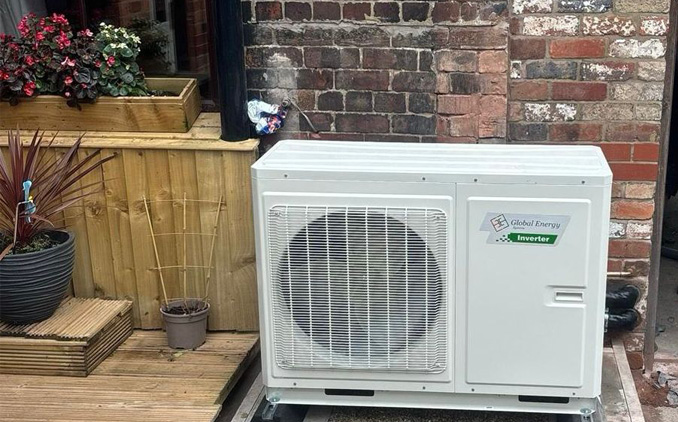
All You Need to Know Before Installing an ASHP
If you are considering installing an air source heat pump, then there are three main factors that must be adhered to:
- Costs: The average cost for installing an air source heat pump is £8,000 – £18,000. In addition to the basic cost, there may also be others incurred depending on the chosen system type, the size of your property, and your individual specific requirements. As a comparison the ground source heat pump prices range from £14,500 – £45,000.
- Insulation: It is very important to have a well-insulated home, particularly with regards to loft insulation. If insulation is at its maximum, then the heat generated within the home is unable to escape, meaning your home will be consistently warm during the winter months.
- Installer: Sourcing the right installer, with all the necessary accreditations is very important when ensuring that the heat pump is installed correctly. Remember to check any reviews and that they are highly recommended and offering a fair price.
If an air source heat pump sounds like the heating system for you and you are considering buying one, contact us for further information.
Simple Installation
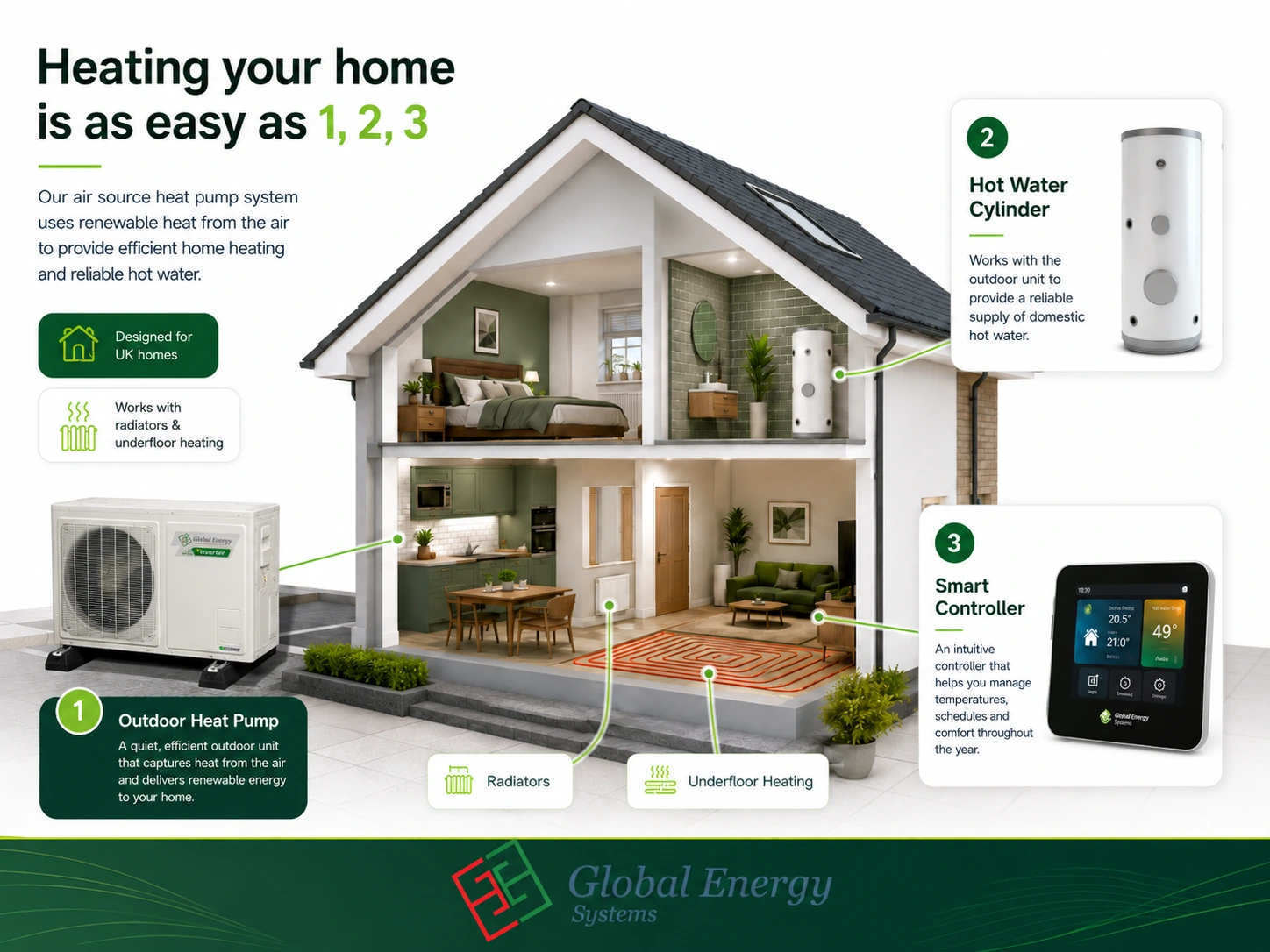
Air source heat pumps are one of the simplest forms of renewable heating to install and maintain. The heat pump is a standalone unit and the cylinder is externally similar to a normal hot water cylinder. There are no ground works and the internal process is similar to a standard heating system upgrade.
Location
The Air Source Heat Pump through its specific engineering can be stood flush to an external wall to save space or can even be located indoors with ducting. The normal solution of placing the unit outdoors means that it can be located in any convenient location on your property. Specially insulated pipes can be used if the unit is to stand away from the property.
During the survey of your property Global Energy Systems will suggest the best location for the heat pump taking into account installation costs and minimising the impact on you and any neighbours.
The cylinders are often placed in the same airing cupboard as an existing cylinder. As they are normally pressurised they can be placed on any floor of a house, or indeed in a plant room. The best location will be identified during the survey.
New Installs and Retrofits
If an air source heat pump is specified during a building or renovation process the piping and wiring can be coordinated to reduce costs. The design of the heating system can be optimised for heat pumps and the layouts and locations pre-planned.
In a retrofit project Global Energy Systems will supply a schedule of radiators for each room, ensuring that the highly efficient low flow temperatures the Air Source Heat Pump used provide full heating for each room in the house. A 40/45°C, 5/4 Star rating on the MCS scale is usually recommended for radiators. This is more than adequate to hold a room at 21°C and offers excellent savings.
The Air Source Heat Pump can be installed as a bivalent solution in tandem with an existing conventional boiler. In this arrangement, Global Energy Systems’ software will control when and if the boiler is used. The advantage of this system is that the conventional boiler can be used for resilience in extreme weather, whilst the air source heat pump provides the vast majority of the property’s heat on all but the coldest of days. As the heat pump and its software is the controlling the use of the conventional boiler this dual fuel, bivalent set up is available for MCS accreditation.
Estimated Installation Timeframe
Installation of a heat pump can be done in a day, but 2-5 days should be allowed if there is integration into an existing heating system.
All air source heat pumps are subject to planning permission. Proof of compliance with planning is required for an MCS accreditation.
Ducted Air
The Air Source Heat Pump range has been engineered to allow ducted air to be used. This allows the heat pump to be installed inside. This can be in a vented space where a single duct expels the cold exhaust air or in a closed space where the fresh air is ducted in as well.
Swimming pools in particular offer the opportunity to duct air from the pool room, thus recycling lost heat, capturing solar gain and offering passive dehumidification. In these situations a heat pump can provide all the heat needed for a domestic pool for year round running.
For more information or to arrange a free survey of your property, please contact us through the link above or on 033 33 44 44 14.